
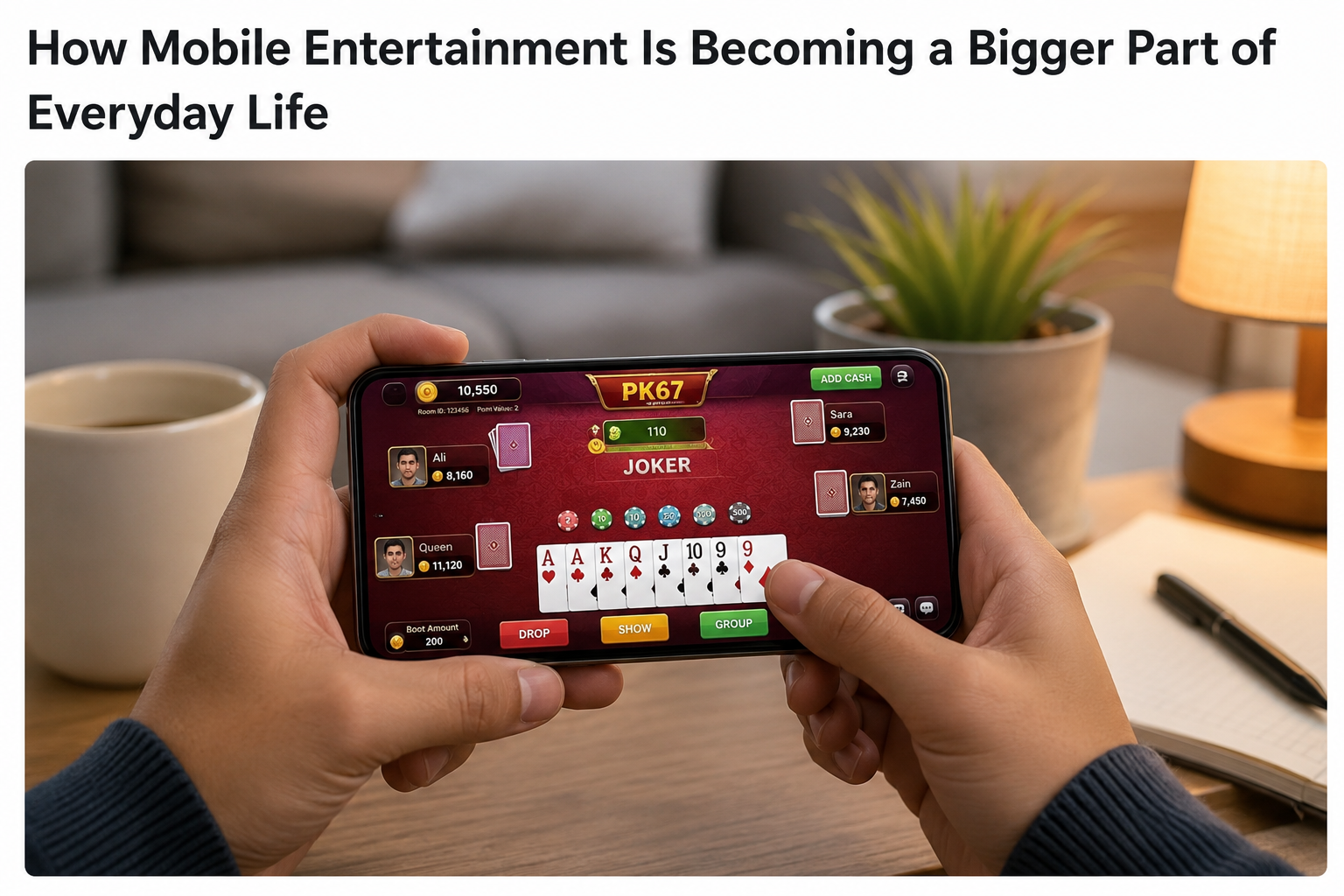
Mobile technology has changed the way people spend their free time. From social media and video streaming to gaming platforms such as PK67 Game, smartphones now provide instant access to countless forms of digital entertainment. As mobile devices become more powerful and internet access continues to improve, more people are turning to their phones as their primary source of recreation.
A decade ago, most forms of digital entertainment required a desktop computer, television, or gaming console. Today, a single smartphone can provide access to social media, streaming services, online communities, educational content, and countless games.
As smartphones become more powerful and internet access continues to expand, people are finding new ways to stay entertained throughout the day. Whether someone is waiting for public transportation, taking a short break at work, or relaxing at home, mobile devices offer convenient access to a wide variety of activities.
The Evolution of Digital Entertainment
Entertainment has always adapted to new technology. Radio transformed communication during the early twentieth century. Television changed how families consumed content. The internet introduced entirely new ways to access information and media.
The smartphone represents another major step in that evolution.
Modern devices combine the functions of multiple technologies into a single portable platform. People can watch videos, listen to music, communicate with friends, read articles, participate in online communities, and play games without switching between devices.
This level of convenience has helped mobile entertainment become one of the fastest-growing segments of the digital economy.
Unlike traditional forms of entertainment that often require dedicated time and attention, mobile experiences can fit into short periods throughout the day. This flexibility makes them attractive to a broad range of users.
For many individuals, mobile entertainment has become a natural extension of everyday life rather than a separate activity.
Why Smartphones Have Become Entertainment Hubs
One reason for the growth of mobile entertainment is the increasing capability of modern smartphones.
Devices that once focused primarily on communication can now support advanced applications, high-quality graphics, live streaming, and interactive experiences. As hardware improves, developers continue creating more sophisticated content designed specifically for mobile users.
Another important factor is affordability.
Smartphones are more accessible than many traditional gaming systems or computers. This allows a larger audience to participate in digital entertainment without making significant financial investments.
Internet connectivity has also improved dramatically in many regions. Faster networks allow users to access content quickly, reducing delays and improving overall experiences.
The combination of better devices, improved connectivity, and lower barriers to entry has created an environment where mobile entertainment can thrive.
Entertainment Anytime and Anywhere
Perhaps the biggest advantage of mobile entertainment is portability.
Unlike televisions or desktop computers, smartphones travel with users throughout the day. This allows people to enjoy entertainment during moments that might otherwise go unused.
A person can watch a short video while waiting in line, read an article during lunch, or enjoy a quick game during a break.
These small moments add up over time and help explain why mobile engagement continues to increase.
The ability to access entertainment instantly has changed expectations. Many users now prefer services and applications that offer immediate access without complicated setup processes.
The Growing Popularity of Casual Gaming
Among the many forms of mobile entertainment, casual gaming has become particularly popular.
Casual games are typically designed to be easy to learn and accessible to a wide audience. Unlike highly competitive or complex titles, casual games focus on providing enjoyable experiences that can be played in shorter sessions.
This makes them ideal for mobile devices.
Many users appreciate games that offer quick entertainment without requiring hours of commitment. A short gaming session can provide relaxation and enjoyment during busy schedules.
The popularity of casual gaming extends across different age groups and backgrounds. Students, professionals, and older adults all participate in mobile gaming activities for various reasons.
Some play to relax. Others enjoy challenging themselves or interacting with friends.
The diversity of motivations contributes to the continued growth of the industry.
Simplicity Creates Accessibility
One characteristic that makes casual games successful is simplicity.
Users often prefer applications that are easy to understand from the beginning. Complicated rules and lengthy tutorials can discourage participation, especially for individuals looking for quick entertainment.
Simple gameplay mechanics allow users to start engaging immediately.
This does not mean casual games lack depth. Many successful titles provide enough challenge to remain interesting over time while maintaining accessibility for newcomers.
Finding the right balance between simplicity and engagement is one of the keys to long-term popularity.
How Digital Communities Enhance User Experiences
Entertainment is no longer limited to individual experiences.
Many modern platforms include social features that allow users to connect with others who share similar interests.
Online communities have become an important part of digital culture. Through forums, social media platforms, messaging applications, and discussion groups, users can exchange ideas, share tips, and discuss experiences.
These interactions often create a stronger sense of engagement.
Instead of simply consuming content, users become part of larger communities centered around shared interests.
Gaming communities provide an excellent example of this trend.
Players frequently discuss strategies, recommend applications, celebrate achievements, and help newcomers learn the basics.
These conversations contribute to a sense of belonging that extends beyond the entertainment itself.
The Role of User Recommendations
Personal recommendations have become increasingly influential in the digital age.
Many people discover new applications, games, and platforms through friends, family members, or online communities rather than traditional advertising.
When users share positive experiences, others often become interested in exploring similar options.
This word-of-mouth effect helps explain why some platforms experience rapid growth despite limited marketing efforts.
Trust plays a significant role in these recommendations.
People often place greater value on feedback from other users because it feels more authentic and relatable.
As a result, community discussions have become a major factor in how individuals discover new forms of entertainment.
Understanding Changing User Preferences
Consumer preferences continue to evolve as technology advances.
Modern users often prioritize convenience, accessibility, and flexibility when choosing entertainment options.
Many people prefer experiences that can fit naturally into their daily routines.
This preference has encouraged developers to create applications designed for short sessions and mobile-first experiences.
Users also increasingly value personalization.
Platforms that allow individuals to customize their experiences often attract stronger engagement because they feel more relevant to individual interests.
Another emerging trend is the desire for variety.
Rather than relying on a single source of entertainment, many users explore multiple platforms and applications depending on their mood and available time.
This behavior reflects a broader shift toward flexible and diverse entertainment habits.
The Impact of Mobile Entertainment on Daily Routines
The influence of mobile entertainment extends beyond leisure activities.
Digital experiences now play a role in how people manage stress, connect with others, and spend their free time.
Many individuals use entertainment as a way to relax after work or study.
Short periods of engagement can provide a mental break and help people recharge before returning to other responsibilities.
At the same time, mobile entertainment often serves as a social activity.
Friends may recommend applications, discuss shared experiences, or participate in activities together through digital platforms.
These interactions demonstrate how entertainment and communication have become increasingly interconnected.
The smartphone has evolved into a central tool for both recreation and social engagement.
Exploring Modern Mobile Gaming Platforms
As interest in mobile entertainment continues to grow, users frequently explore new platforms that align with their preferences.
The market offers a wide variety of options designed to accommodate different interests and playing styles.
Some users enjoy puzzle-based experiences, while others prefer card games, strategy games, or interactive social platforms.
This diversity ensures that individuals can find experiences suited to their specific interests.
During my own exploration of mobile entertainment trends, I noticed how platforms such as PK67 Game reflect the broader movement toward accessible digital recreation.
Rather than requiring specialized hardware or extensive setup processes, platforms like these focus on providing experiences that can be accessed directly through mobile devices.
Their growing visibility highlights the increasing demand for convenient entertainment solutions that fit naturally into modern lifestyles.
The popularity of such platforms is less about any single application and more about the broader shift toward mobile-first entertainment experiences.
The Importance of Responsible Digital Habits
As digital entertainment becomes more integrated into everyday life, maintaining healthy habits remains important.
Technology offers many benefits, but balance continues to play a critical role in overall well-being.
Users can enjoy mobile entertainment while still prioritizing responsibilities, relationships, and physical activities.
Setting reasonable boundaries helps ensure that entertainment remains a positive part of daily life.
Many experts recommend taking regular breaks, managing screen time, and maintaining a variety of offline activities.
These practices support a balanced lifestyle while allowing individuals to continue enjoying digital experiences.
Responsible engagement benefits both users and the broader digital ecosystem.
Platforms that encourage healthy habits often contribute to more sustainable and enjoyable experiences for their communities.
Looking Ahead: The Future of Mobile Entertainment
The future of mobile entertainment appears promising.
Advancements in technology will likely continue expanding the possibilities available to users.
Improved devices, faster internet connections, and innovative software development are expected to create even more engaging experiences.
Artificial intelligence, enhanced personalization, and interactive features may further transform how people interact with digital content.
At the same time, user expectations will continue evolving.
People will likely seek experiences that combine convenience, quality, and meaningful engagement.
Developers and platforms that successfully meet these expectations may play important roles in shaping the next generation of digital entertainment.
The industry will continue adapting as technology and consumer preferences change.
Conclusion
Mobile entertainment has become a defining feature of modern digital life. Smartphones now provide access to an incredible range of activities, allowing users to stay connected, informed, and entertained wherever they go.
The growth of casual gaming, online communities, and mobile-first platforms reflects broader changes in how people spend their leisure time. Convenience, accessibility, and flexibility have become central priorities for many users.
As technology continues advancing, mobile entertainment will likely remain an important part of everyday routines. Platforms such as PK67 Game represent one example of the many options available within this rapidly evolving landscape.
More importantly, they illustrate a larger trend: the increasing role of mobile technology in shaping how people relax, interact, and engage with digital experiences in the modern world.
