
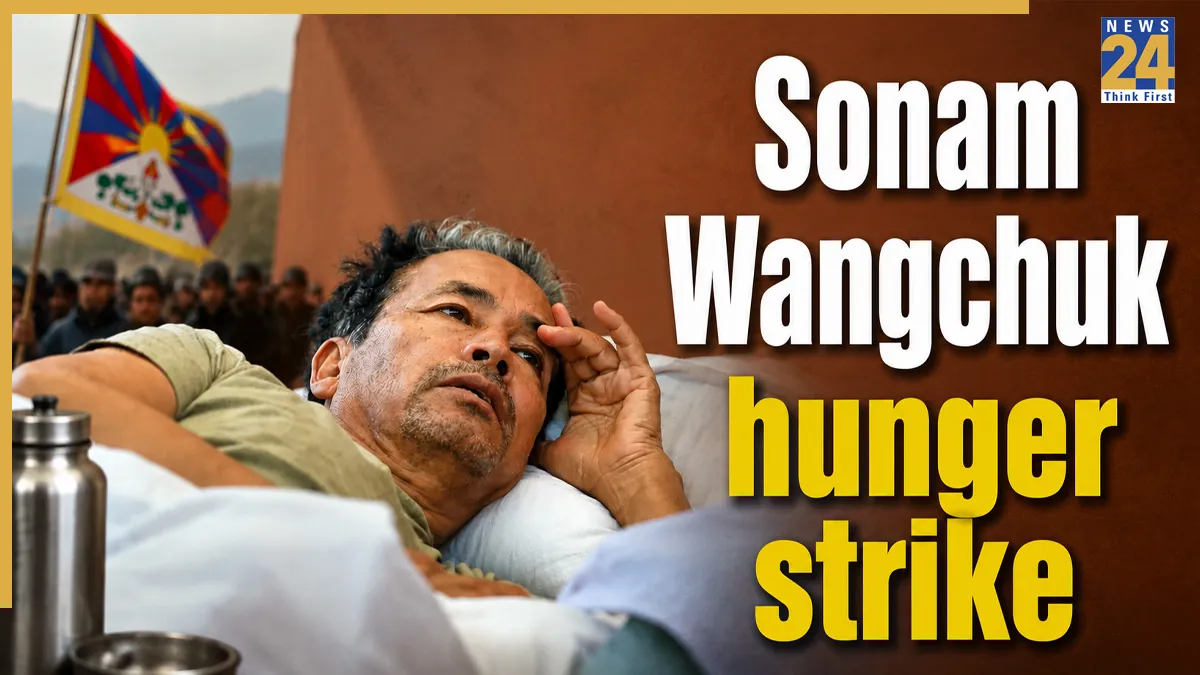
Social activist, education reformer, and environmentalist Sonam Wangchuk has once again become the center of national attention following his prolonged hunger strike. Known globally for his work in sustainable education and climate innovation, Wangchuk’s latest protest has sparked widespread public debate, political discussions, and support from students, environmentalists, and civil society groups.
In this article, you’ll find the latest Sonam Wangchuk hunger strike update, the reason behind his fast, the timeline of events, his demands, government response, health condition, and what this movement could mean for India’s future.
Who Is Sonam Wangchuk?
Sonam Wangchuk is an engineer, education reformer, inventor, and climate activist from Ladakh. He is widely recognized for founding innovative educational initiatives and developing the famous Ice Stupa technology to help communities conserve water in cold desert regions.
Over the years, he has become a respected voice on environmental conservation, sustainable development, education reforms, and the protection of Himalayan ecosystems.
Why Did Sonam Wangchuk Start His Hunger Strike?
The recent hunger strike was launched as a peaceful protest to demand greater accountability and reforms. According to recent reports, Wangchuk said his fast was intended to draw national attention to issues affecting students and the broader education system, while also emphasizing transparency and responsible governance.
Throughout the protest, he stressed that peaceful democratic action remains an important way to encourage dialogue and policy changes.
Latest Sonam Wangchuk Hunger Strike Update
The latest developments indicate that Sonam Wangchuk ended his hunger strike after approximately 26 days following written assurances from authorities and concerns about the safety of protesters. Reports state that he decided to stop fasting primarily to avoid any escalation that could put supporters at risk, rather than because all of his demands had been fulfilled.
Following medical supervision, Wangchuk remained under observation before being discharged from the hospital. Medical experts monitored his condition closely because prolonged fasting can lead to dehydration, electrolyte imbalance, weakness, and other serious health complications.
Although the fast has concluded, discussions surrounding his demands and the broader issues he raised continue in public and political circles.
Timeline of the Hunger Strike
Beginning of the Protest
- Sonam Wangchuk began his indefinite hunger strike to highlight major public concerns.
- The movement quickly gained attention across India.
Growing Public Support
- Students, activists, educators, and environmental supporters joined demonstrations.
- Social media campaigns helped amplify his message nationwide.
Health Concerns Increase
- After several weeks without food, doctors regularly monitored his health.
- Medical teams warned about the risks associated with prolonged fasting.
Hospitalization
- Authorities shifted Wangchuk to a hospital for medical observation as his condition became increasingly fragile.
- Legal discussions also emerged regarding his hospitalization and treatment.
Hunger Strike Ends
- Wangchuk ended the fast after receiving written assurances and citing the need to protect supporters from potential confrontation.
What Were Sonam Wangchuk’s Main Demands?
During the protest, Wangchuk repeatedly emphasized accountability, transparency, and meaningful reforms. Public reports highlighted demands including:
- Better governance and accountability
- Greater transparency in addressing public concerns
- Parliamentary discussion on the issues raised
- Long-term policy reforms rather than temporary solutions
Government Response
Government representatives engaged in discussions with protest organizers during the hunger strike. According to reports, written assurances regarding future discussions and parliamentary attention played a role in Wangchuk’s decision to conclude the fast.
However, many observers note that the broader policy debates initiated by the protest are likely to continue beyond the end of the hunger strike.
Public Reaction
The hunger strike generated significant public interest across India.
Support came from:
- Students
- Teachers
- Environmental activists
- Civil society organizations
- Public intellectuals
Many supporters praised Wangchuk’s commitment to peaceful protest and democratic engagement, while others emphasized the need for constructive dialogue between citizens and policymakers.
Health Condition After the Hunger Strike
Doctors reported that Wangchuk experienced considerable weakness due to the prolonged fast. Medical monitoring included hydration support and electrolyte management to reduce health risks.
Experts generally recommend careful medical supervision after extended fasting because the body requires gradual nutritional recovery rather than an immediate return to a normal diet.
Why This Protest Matters
Regardless of differing political opinions, the hunger strike has highlighted several broader issues:
- Public participation in democracy
- Peaceful methods of protest
- Transparency in governance
- Education-related concerns
- Long-term public policy reforms
The movement has also demonstrated how one individual’s peaceful protest can generate nationwide discussion and encourage public engagement.
What’s Next?
Although the hunger strike has ended, attention is now shifting toward:
- Government follow-up on assurances
- Continued public discussions
- Future policy decisions
- Possible parliamentary debates
- Ongoing civic activism
Observers will be watching closely to see whether the commitments made during the protest result in concrete action.
Top Google Searches Related to Sonam Wangchuk Hunger Strike Update
People also search for:
- Sonam Wangchuk latest news
- Sonam Wangchuk hunger strike today
- Why is Sonam Wangchuk protesting?
- Sonam Wangchuk health update
- Sonam Wangchuk latest protest
- Sonam Wangchuk demands explained
- Sonam Wangchuk hospital update
- Sonam Wangchuk Ladakh news
- Sonam Wangchuk education reforms
- Sonam Wangchuk protest timeline
- Sonam Wangchuk environmental activism
- Sonam Wangchuk latest speech
- Sonam Wangchuk government response
- Sonam Wangchuk protest update today
- Sonam Wangchuk current news
Frequently Asked Questions (FAQs)
1. Why did Sonam Wangchuk go on a hunger strike?
Sonam Wangchuk began the hunger strike to draw attention to issues he believes require urgent public discussion and policy reform. He used a peaceful protest to encourage accountability and constructive dialogue.
2. How long did Sonam Wangchuk’s hunger strike last?
According to recent reports, the hunger strike lasted about 26 days before he decided to end it under medical supervision.
3. Is Sonam Wangchuk’s health stable now?
Following hospitalization and medical care, Wangchuk’s condition was reported as stable, though doctors continued monitoring his recovery after the prolonged fast.
4. Did the government accept his demands?
Reports indicate that written assurances and commitments for further discussions contributed to Wangchuk’s decision to end the fast. However, the long-term implementation of broader reforms remains an ongoing matter.
5. Why is Sonam Wangchuk famous?
He is internationally recognized for his work in sustainable education, environmental innovation, and the development of the Ice Stupa project. He has also been a prominent advocate for issues affecting Ladakh and the Himalayan region.
6. Where is Sonam Wangchuk from?
Sonam Wangchuk is from Ladakh, India, where he has spent decades working on education, environmental conservation, and sustainable development projects.
7. What happens after the hunger strike ends?
After ending the fast, attention typically shifts to whether authorities follow through on commitments made during negotiations. Public interest often remains focused on policy discussions, implementation, and future developments.
