
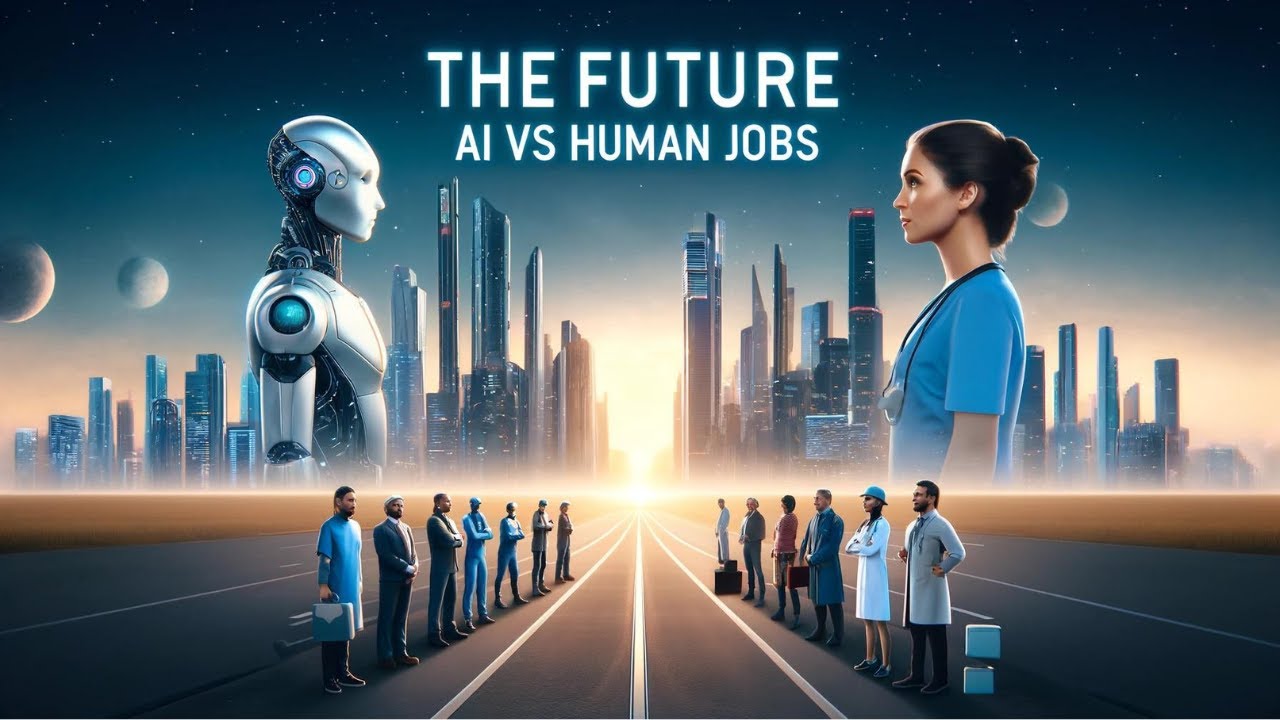
We hear the same question echoing through offices, colleges, and cafes across the country: will machines take over my livelihood? As we navigate the AI vs human jobs future in India 2026, the narrative has shifted from science fiction to our daily reality.
Major IT firms are restructuring their hiring processes, and businesses are focusing on productivity rather than mass recruitment. But this shift does not mean a massive job apocalypse. Instead, we are witnessing a rapid metamorphosis of the workforce. Routine tasks face automation, while new, complex roles emerge at an unprecedented pace.
This guide breaks down exactly what the employment landscape looks like right now, which roles remain secure, and how you can adapt to thrive alongside artificial intelligence.
The Shifting Landscape of India’s Tech Sector
For decades, India’s economic growth relied heavily on the IT sector. Millions of young professionals secured back-office and software development roles, fueling a massive consumption boom that anchored the rising middle class. Now, generative AI challenges that very foundation.
Companies realize they can execute the same amount of work with fewer people. We see major corporations reducing their entry-level headcount and shifting from labor arbitrage to tech arbitrage. This structural reset prioritizes productivity-led growth. Rather than hiring thousands of fresh graduates for basic coding or data entry, employers want specialists who can orchestrate complex AI workflows.
This transition poses a significant challenge. However, it also presents a lucrative opportunity for those willing to adapt and upskill.
Beware the Mid-Skill Trap
The biggest risk in 2026 is falling into the “mid-skill trap.” If your daily responsibilities involve highly predictable, rule-based actions, you face a higher risk of displacement. AI systems excel at pattern matching, data extraction, and boilerplate generation.
Roles Facing High Automation Risk
- Data Entry Operators: Software now reads, processes, and organizes documents faster and more accurately than human hands.
- Basic Customer Support (L1): Advanced chatbots manage first-line queries across multiple languages, operating around the clock without fatigue.
- Routine Bookkeeping: Tasks like invoicing and basic tax filing easily fall under the domain of automated financial software.
- Commodity Copywriting: Systems generate standard SEO articles and product descriptions in seconds, reducing the need for basic content writers.
- Junior Developers: AI code assistants write boilerplate scripts and run standard quality assurance tests, lowering the demand for entry-level programmers.
If your job heavily relies on repetitive execution, the time to pivot is right now.
Careers Where Humans Remain Irreplaceable
While algorithms process data brilliantly, they lack emotional intelligence, physical dexterity, and complex strategic judgment. The AI vs human jobs future in India 2026 heavily favors professionals who bring uniquely human traits to the table.
Healthcare and Medicine
Surgeons, nurses, and emergency physicians operate in unpredictable physical environments. While AI acts as a fantastic diagnostic assistant, the actual treatment, physical care, and patient empathy remain strictly human domains. Mental health therapists also see massive demand, as machines simply cannot replicate deep human connection and trust.
Strategic Leadership and Consulting
Business consultants navigate complex organizational politics, negotiate deals, and solve multi-layered problems. AI might provide the data analytics, but a human must interpret that data to make strategic, culturally relevant decisions.
Skilled Trades
Electricians, plumbers, and HVAC technicians work in highly variable, real-world conditions. A robot cannot easily navigate the unique architecture of an older building to fix complex wiring. The demand for these hands-on experts continues to outpace supply.
Education and Mentorship
Teachers do much more than deliver facts. They inspire, motivate, and provide emotional support to students. AI can deliver a customized lesson plan, but a human mentor builds character and resilience.
How to Future-Proof Your Career Today
You do not need to fight artificial intelligence. You just need to learn how to use it better than your peers. The most successful professionals view these tools as a catalyst for their own productivity.
- Develop AI Literacy: Make it a habit to use large language models and workflow automations daily. Understand prompting, output evaluation, and system integration.
- Lean into Emotional Intelligence (EQ): Enhance your communication, leadership, and relationship-building skills. Machines cannot network or show genuine empathy.
- Combine Domain Expertise with Technology: A marketer who uses AI for data analytics or a lawyer who uses it for precedent research becomes incredibly valuable. Specialize deeply in your field and let technology handle your grunt work.
- Embrace Continuous Upskilling: The half-life of a learned skill is shrinking. Take online certifications, attend workshops, and stay curious about emerging tech trends.
Top Google Searches Related to AI vs Human Jobs Future in India 2026
To understand what professionals across the country are worrying about, let us look at the most frequent search queries surrounding this topic:
- Will AI replace software engineers in India by 2030?
- Safe career paths from AI automation in 2026
- How to upskill for AI jobs in India
- Impact of AI on BPO industry in India
- Highest paying AI prompt engineering jobs in Bangalore
- AI tools every professional must know 2026
Frequently Asked Questions (FAQ)
Q: Will AI completely take over the Indian IT sector?
A: No. While it is reducing mass entry-level hiring for routine coding and testing, it is creating new roles for AI architects, system designers, and prompt engineers. The sector is evolving to focus on higher-value output rather than sheer human volume.
Q: Which industries are the safest from automation right now?
A: Healthcare, mental health counseling, skilled physical trades, teaching, and complex strategic consulting are highly resilient. These fields require deep empathy, physical adaptability, or nuanced human judgment that algorithms simply do not possess.
Q: I work in basic customer service. What should I do to protect my job?
A: Transition toward complex escalation management or customer success roles. Focus on building deep client relationships, handling nuanced complaints that require empathy, and learning how to manage the AI chatbots that handle the first-line queries.
Q: Do I need to learn coding to survive the AI revolution?
A: Not necessarily. While understanding basic logic helps, AI literacy is more about knowing how to direct the tools. Learning how to properly prompt an AI, evaluate its output, and integrate it into your specific industry workflow is far more crucial than writing raw code from scratch.
Q: Is artificial intelligence creating any new jobs in India?
A: Yes, absolutely. We are seeing a massive surge in demand for AI risk analysts, data governance experts, ethics officers, and AI integration specialists. The technology destroys tasks, not necessarily entire careers, while birthing entirely new industries.
Conclusion
The AI vs human jobs future in India 2026 is not a battle; it is a partnership. The workforce is shedding its reliance on monotonous, repetitive tasks and stepping into an era that values critical thinking, creativity, and emotional depth.
You hold the power to dictate your career trajectory. Start using these digital tools today, focus on your uniquely human skills, and position yourself as a professional who can guide the machines rather than compete against them. The future belongs to those who adapt.
