
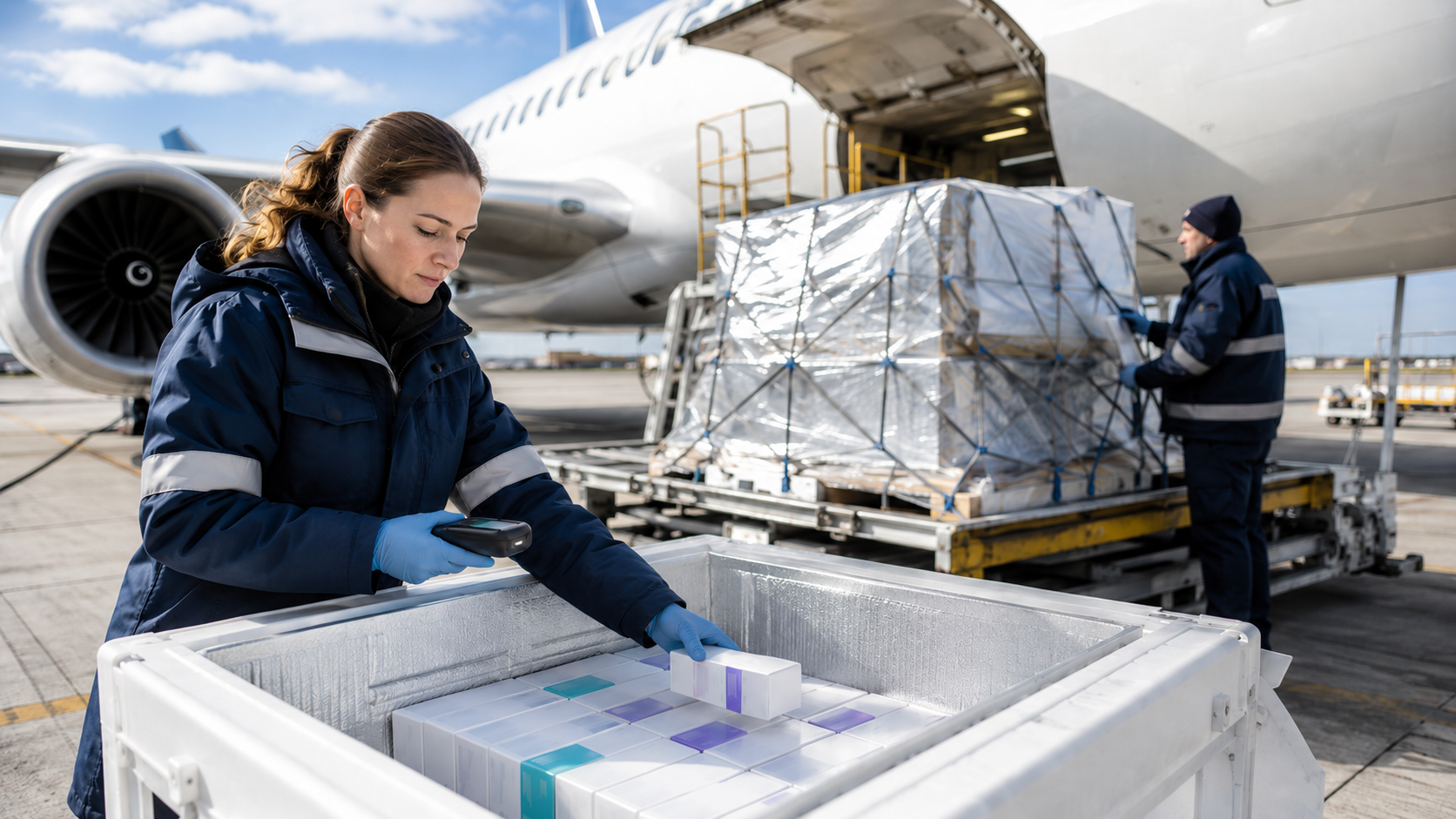
Shipping sensitive pharmaceuticals by air to Turkey requires more than a fast flight. Medicines, vaccines, biologics, diagnostic materials, laboratory supplies, and temperature-sensitive ingredients can lose quality if they are exposed to unsuitable conditions. In some cases, the product may look normal, even though its effectiveness has already been affected. This is why pharmaceutical air freight to Turkey depends on cold chain planning, accurate documentation, suitable packaging, and careful coordination at every stage.
Why Cold Chain Logistics Matters in Pharma Shipping
Cold chain logistics means that a product stays within the required temperature range from pickup to final delivery. For pharmaceutical goods, this may involve refrigerated, frozen, or controlled room-temperature conditions. The exact range depends on the product, its formulation, and the manufacturer’s instructions.
A broken cold chain can create serious problems. Delayed cargo, unsuitable packaging, long customs checks, or incorrect storage at an airport terminal may all affect product quality. This is why companies arranging pharmaceutical cargo often work with logistics providers that understand time-sensitive and temperature-controlled shipments.
Why Turkey Requires Careful Air Freight Planning
Turkey is a major connection point between Europe, Asia, and the Middle East, which makes it important for international trade and healthcare supply chains. Air freight is often used when pharmaceutical products need to reach hospitals, distributors, laboratories, or medical suppliers within a limited time.
However, the flight is only one part of the route. Before departure, the shipment may go through pickup, packing, labeling, export clearance, security screening, airport handling, and loading. After arrival in Turkey, it may still require import clearance, controlled storage, unloading, and final-mile delivery. Each stage can affect the cold chain if it is not planned properly.
Packaging: The First Defense Against Temperature Excursions
The right packaging protects pharmaceutical cargo from temperature changes during handling and transit. Passive packaging may use insulated containers, gel packs, dry ice, or phase-change materials. Active containers can regulate temperature with built-in systems, but they require planning, availability checks, and power management.
Packaging should match the route, expected transit time, season, product sensitivity, and possible waiting periods at airports. This is especially important for shipments to Turkey, where cargo may move through several handling points before reaching the final consignee. A solution that works for a short domestic route may not be suitable for an international shipment with customs clearance and airport storage.
Documentation and Customs Can Affect Product Quality
Paperwork is not just an administrative detail in pharmaceutical air freight. Missing or inaccurate documents can hold cargo at the border, and every extra hour may increase the risk of a temperature deviation. Typical documents may include a commercial invoice, packing list, air waybill, product description, temperature requirements, safety data where needed, and import permits for regulated goods.
For businesses that need to understand how air freight to Turkey is arranged for sensitive and specialized cargo, destination-specific logistics information is available on this page. This matters because transit time, customs procedures, airport handling, and cargo type all influence how a pharma shipment should be prepared.
Monitoring the Shipment in Real Time
Temperature loggers and tracking systems play an important role in pharmaceutical shipping. They help confirm whether the cargo stayed within the required range and where a possible deviation occurred. Some shipments use single-use data loggers inside the package, while others rely on connected devices that transmit location and temperature updates.
Monitoring does not prevent every problem, but it gives shippers visibility. If a delay occurs during airport handling or customs clearance, the logistics team can decide whether the cargo should be moved to controlled storage, re-iced, inspected, or prioritized for release.
Risk Points That Can Break the Cold Chain
Cold chain failures often happen during handovers, not only during transport. The main risk points include:
- Pickup delays. Cargo may sit too long before being transferred to controlled conditions.
- Incorrect packaging. Insulation or coolant may not match the route duration.
- Airport storage. Not every storage area is suitable for temperature-sensitive goods.
- Customs delays. Missing paperwork can extend exposure time.
- Final-mile delivery in Turkey. The product may be vulnerable after arrival if the receiver is not ready or if controlled transport is not arranged.
How Businesses Can Prepare Pharma Cargo for Turkey
A good pharmaceutical shipment starts with accurate product data. The shipper should know the required temperature range, maximum allowed transit time, packaging limits, and what to do if a delay occurs. The logistics plan should also include backup options, such as controlled storage, alternative flights, or additional coolant where appropriate.
It is also important to mark the shipment clearly, book suitable handling in advance, and make sure the consignee in Turkey is ready to receive the cargo. In cold chain logistics, successful delivery is not simply the moment the package arrives. It is the moment the product arrives in usable condition.
Final Thoughts
Air freight can be a strong option for sensitive pharmaceutical shipping to Turkey because it reduces transit time and supports urgent healthcare supply chains. Yet speed alone is not enough. The cold chain depends on packaging, customs preparation, monitoring, airport handling, and coordination between every party involved.
For businesses shipping medicines, vaccines, diagnostic materials, or other temperature-sensitive healthcare products to Turkey, the main goal is consistency. The cargo must remain protected before the flight, during the flight, and after arrival. When each step is planned carefully, air freight can help move critical pharmaceutical products quickly without compromising their quality.
