
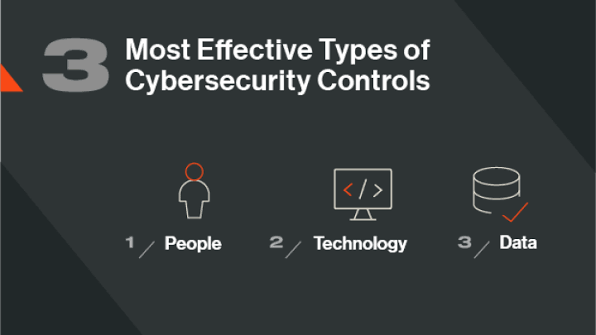
For enterprise IT tops, network security is not an abstract tech category it is actually a portfolio of tools, each with a procurement process, configuration weight, renewal date and dedicated collections of man/hrs to make it functionally. This first feature, understanding which types of network security controls are available to you is just the beginning. More difficult and long-lasting is determining what controls an organization truly needs, how to deploy them and layer them in without creating complexity that cannot be managed and how best to staff the operational function that maintains those controls once up and running.
This operational reality informs a far less disciplined but ultimately more pragmatic approach to network security than an inventory of control categories across the enterprise IT function might otherwise imply. The firewall, intrusion detection system or access control platform that would do very well as a standalone product can turn into an albatross around your neck because it is unintegrated, poorly maintained and sitting there doing the same work three other tools are doing as they perform better. The question for IT leaders is rarely, “what types of controls exist” but, “which controls can we afford to maintain operationally and how do we run those well.”
Types of network security in enterprises provide a foundational reference for understanding the basic categories of network security controls (the core control types that combine to create an overall network security architecture).
The Operational Reality Of Control Sprawl
Enterprise IT groups rarely build their complete cybersecurity stack from scratch. Most often, the stack grows over time through mergers and acquisitions, departmental purchasing separate from central IT, and an ever-increasing flow of point solutions bought to handle a specific incident or emergent threat. This often leads to even larger, more disjointed arrays of network security tools than the threat landscape warrants in many organizations.
In many cases, this accumulation pattern dubbed tool sprawl leads to real sustained operational costs beyond the obvious licensing fee. Every new tool you add requires its own setup, its own update process, needs training staff with a learning curve and integration work to get it to provide useful information through the entire security stack. Poor Integration: If the tools do not integrate well, it is up to already over-tasked IT/Security staff to correlate information across different tools – increasing the likelihood that true threat signals are drowned out by noisy alerts from multiple poorly coordinated systems.
A structured approach to managing this, detailed in security tool stack consolidation guidance from Gartner via TechRepublic, recommends that enterprise IT teams begin by assessing which existing controls still map to a genuine, documented risk, eliminating those that no longer serve a clear purpose. The guidance also points to a pattern many enterprises encounter directly: redundant tooling that emerges from acquisitions or departmental purchasing, where multiple products provide overlapping functionality, such as several endpoint detection tools all reporting into the same security platform, creating duplicate alerts and increasing the chance that a genuine threat goes unnoticed.
Mapping Control Types to Organizational Risk
High-performing enterprise IT organizations do not deploy every network security control type by default, instead they coalesce their investment around specific controls that are linked to a well-documented risk threat model. While the firewall is still working fine, if an office has moved to permanent remote work, this would remove the justification for a firewall deployed to prevent data exfiltration risk from that network. The control is no longer dealing with the risk that was originally acquired for.
This discipline of risk mapping cuts across all classes of network security controls an enterprise may contemplate: perimeter defense, intrusion detection and prevention, access control and identity management, encryption, network segmentation, as well as email & web security. Each category serves a particular type of risk, and it is a good idea for IT teams to use this framework from time-to-time to double-check whether the controls they have deployed are still appropriate for the risks that may now be present in their organization, instead of automatically assuming that vendor acquisitions continue to make sense indefinitely.
Network Security Staffing Structure
However, the deployment of network security controls is only half of the operational equation. The other half is developing the organizational capability to observe, adjust and respond to what those controls generate. This operational function typically resides within a security operations team (either in the form of a dedicated security operations center or embedded within IT staff with security responsibilities) for most enterprises.
A useful framework for understanding what a fully functioning security operations capability includes is laid out in the SecOps team functional structure described by independent security consultant Chris Crowley, which identifies the distinct functional areas that enterprise IT teams need to coordinate: a steering function that aligns security strategy with business priorities, network security monitoring that inspects internal data for anomalies, threat intelligence that studies adversary behavior to inform defenses, incident response capability to contain and remove active threats, forensics capacity to investigate incidents in detail, and ongoing self-assessment through vulnerability scanning and penetration testing.
This framework makes clear the need to remember that network security controls do nothing on their own. You are only as good as your ability to triage a next-gen firewall through log reviews, rule tuning, and actioning any flags it raises. Read more: Tip-toeing through alerts. An IDS is not worth its weight if the team cannot investigate its alerts. Therefore, Enterprise IT teams that buy a lot of control technology without commensurate operational capabilities to run it around will mitigate the benefit of the underperforming controls they have purchased, not due to any deficiency in the actual technology but rather because no organization had ever been designed with that direction of right effectiveness.
The Managed Services Question and Build Versus Buy
Because of the need for 24/7 monitoring that intrusion detection and prevention, as well as broader security operations functions require, not every enterprise IT team has the staffing resources to operate every type of network security control completely in-house. This has led to the growth of large arrangements for managed security services, outsource arrangements, where organizations hire an outside provider to operate category types of network security control on behalf of the organization and allow internal IT staff to focus on functions that are within a deeper organizational context.
Picking the controls to manage in-house and which ones to outsource is a strategic choice that enterprise IT teams are best off making intentionally instead of by default. Controls that require ongoing specialized monitoring (like intrusion detection in distributed environments) are prime candidates for managed services, especially those organizations with scarce people resources to support 24/7 coverage. Controls more tightly integrated with application common access policies unique to that business (e.g., access control and identity management) and data sensitivity classifications tend to remain internal, because knowledge about how the organization is structured as a business and what risks it will tolerate is difficult to effectively outsource.
Vendor Consolidation and Platform Decisions
In addition to removing the need for redundant point tools, lots of enterprise IT teams are also examining: will we consolidate on broader and more integrated network security platforms rather than relying on best-of-breed point solutions from their respective vendors? Consolidation is attractive because it can lower integration overhead, provide a consistent management interface across multiple control categories, and simplify vendor relationships. There is at least one downside to this, reduced flexibility in selecting the absolute best-performing tool for each individual control category, as a single platform may not be able to match the capability of a specialized point solution in every category that it covers.
The decision often comes down to this approach or that, depending on the size and complexity of the organization. Smaller IT departments cannot ignore capacity limits and generally gain more from consolidated platforms that reduce the number of disjointed systems needing familiarity and management. For larger organizations with specialists devoted to different security domains, some further flexibility may remain — there often might be an appetite and ability to fuse best-of-breed tools across categories in exchange for a tolerable degree of integration burden (with stronger capability within each individual control area).
Sustaining State Network Security Operating Model
As threats change and new categories of technology emerge the types of network security controls that are available for enterprise IT teams will also continue to grow. Effective enterprise security programs are nothing about the number of different controls deployed, but rather how effectively they plant the groundwork to deploy and run those controls in a manner that is sustainable.
More will be required; for example, thinking of control selection not as a procurement decision but an ongoing risk-mapping exercise, constructing the staffing and organizational architecture to truly run deployed controls rather than having the technology run itself, and periodically reviewing whether the stack that has accumulated actually maps to the current risk profile of the organization rather than its historical purchasing decisions. Enterprise IT teams who attack network security with this lens of operational discipline will have all the capability they need while avoiding the tool sprawl and operational burden that continues to plague so many organizations over time.
Frequently Asked Questions
Enterprise IT teams should be able to detect which network security tools are redundant
The process of spotting redundant tools begins by taking an inventory of all controls in use alongside the function that each one serves, before feeding into considerations which look for overlap between tools solving similar risks. Another familiar scenario features more than one product that provides similar capabilities, such as overlapping endpoint detection tools typically the result of mergers and acquisitions or departments buying independently without Procurement’s approval. Querying telemetry data from other tools can show you which controls are functioning as intended, which ones do not perform well and those that generate too many false positives for their cost.
Do you manage all your network security controls in-house or use managed services?
It then relies on the available staff with a specific focus for each category of control. Several controls are good candidates for managed services if your internal teams do not have the bandwidth for continual, specialized monitoring prowess; around-the-clock intrusion detection is one example. Controls that are heavily reliant on organization day-to-day parameters, such as access control policies based on internal data sensitivity classifications, tend to be kept in-house more often because this institutional knowledge does not translate easily outside the organisation.
In which organizational functions do you need to have for network security controls to work efficiently?
Not only the technology, but also an organized structure: alignment to the business priorities, the ability to tell between normal security data and anomalies, threat intelligence that informs on defensive priorities and incident response capability; containment of active threats and forensic investigation capacity as well as continuous self-assessment through vulnerability scanning (and testing) Even the best network security controls with regard to selection will not meet their potential without these functional areas in place and staffed effectively.
