
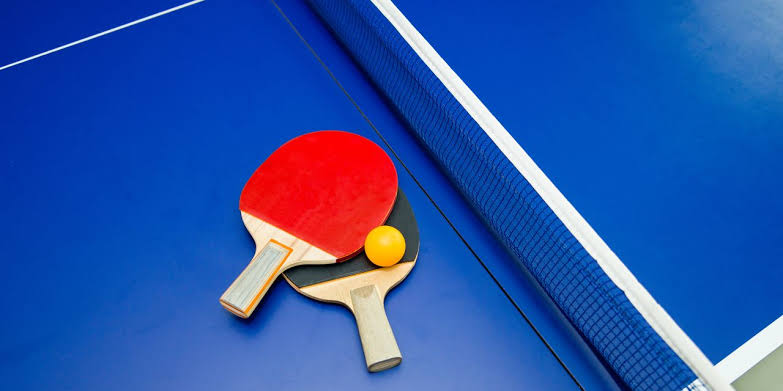
Table tennis is one of the world’s most recognizable racket sports. Played in schools, community centers, homes, clubs, and professional arenas, it combines quick reactions, precise technique, strategy, and physical movement in a format that is relatively easy for beginners to understand. At the highest level, however, the sport becomes an extraordinarily demanding contest of speed, timing, concentration, and tactical intelligence.
From its early development as an indoor recreational activity to its status as an Olympic sport, Table Tennis The Sport has continued to evolve. Advances in equipment, coaching, sports science, and international competition have helped transform the game while preserving the simple objective that makes it so appealing: send the ball over the net and make it difficult for the opponent to return.
A Brief History of Table Tennis
The origins of table tennis can be traced to late-19th-century indoor versions of lawn tennis. Early players adapted familiar tennis ideas to smaller spaces, using tables, improvised nets, lightweight balls, and simple paddles.
As the game became more organized, manufacturers began developing specialized equipment. Rules were standardized, clubs appeared in different countries, and international competitions helped establish table tennis as a serious sport rather than simply a recreational pastime.
The formation of the International Table Tennis Federation in 1926 was an important milestone in the sport’s development. International governance helped establish common rules and create a framework for global competitions.
Table tennis eventually became part of the Olympic program at the 1988 Seoul Games. Olympic competition gave the sport an even larger international platform and helped introduce elite players and distinctive playing styles to audiences around the world.
Understanding the Basic Rules
Although professional table tennis can look extremely complicated, the basic scoring system is relatively straightforward.
A standard game is generally played to 11 points, with a player needing to win by at least two points. A match can consist of an odd number of games, depending on the competition format, with the winner being the player or pair who takes the required majority.
Players alternate serves according to the applicable rules. In singles, the serve must bounce on the server’s side before crossing the net and landing on the opponent’s side. In doubles, service and positioning requirements become more specific.
The ball must be returned after it bounces on the receiving player’s side. A point is awarded when an opponent fails to make a legal return or otherwise commits a fault.
Competitive events can include singles, doubles, and mixed doubles. Each format introduces different tactical challenges. Doubles, for example, requires players to coordinate movement and shot selection while taking turns hitting the ball.
Why Technique Matters So Much
One of table tennis’s defining characteristics is the importance of technique. Players do not simply hit the ball back and forth. They manipulate speed, spin, placement, trajectory, and timing to create opportunities.
The racket angle is particularly important. A small adjustment can significantly change the direction or trajectory of the ball. Players also learn different forms of spin, including topspin, backspin, and sidespin.
Topspin can help produce an aggressive, forward-moving shot, while backspin can make the ball more difficult to attack. Sidespin can alter the ball’s movement and force an opponent to adjust their racket angle.
Developing these skills takes practice. Beginners generally start by learning consistent forehand and backhand strokes before gradually introducing more advanced footwork, serves, returns, and spin techniques.
The Importance of Footwork and Positioning
It can be tempting to think that table tennis is primarily about the hands, but effective footwork is equally important.
Players constantly adjust their position to reach the ball while maintaining balance. At higher levels, movement can involve rapid side-to-side steps, quick recovery toward a ready position, and precise positioning for the next shot.
Good positioning allows a player to strike the ball at a comfortable height and distance. Poor positioning can turn an otherwise simple shot into a difficult recovery.
This combination of hand-eye coordination and movement is one reason table tennis can be both accessible to beginners and highly demanding for experienced competitors.
Strategy Goes Beyond Simply Hitting Hard
Power is only one part of successful table tennis. Strategic thinking can be just as important.
A player may deliberately place the ball toward different areas of the table to make an opponent move. They might change the amount of spin or vary the speed of their shots to disrupt rhythm.
Serve selection is another major strategic element. A well-executed serve can create pressure immediately, while the receiver must read the ball carefully and determine how to respond.
At an advanced level, players constantly analyze patterns. They may notice that an opponent struggles against a particular type of spin, has difficulty returning a certain serve, or prefers a particular area of the table.
This makes table tennis a game of adaptation. A successful competitor must be able to change tactics rather than rely on one predictable approach.
Why Table Tennis Attracts Players Worldwide
One reason for table tennis’s global popularity is its accessibility. A full-size outdoor field is unnecessary, and the basic equipment requirements are relatively simple compared with many other sports.
The sport can also accommodate different skill levels. A beginner can enjoy a casual rally, while experienced players can spend years developing sophisticated techniques.
Table tennis is also highly adaptable to different environments. Schools can organize activities around tables, clubs can provide structured coaching, and communities can use the sport as an affordable recreational option.
Its international character is another major attraction. Major tournaments bring together athletes from countries with different sporting cultures, creating a global community around a relatively universal set of rules.
The Modern Competitive Game
Modern table tennis is faster and more technically sophisticated than many early versions of the sport. Equipment technology has played a significant role in that transformation.
Modern rackets use specialized rubber surfaces designed to provide different levels of speed and spin. Balls and tables are also manufactured to meet standardized specifications for competitive play.
Training has evolved as well. Professional athletes use video analysis, structured fitness programs, reaction drills, tactical preparation, and detailed match analysis.
Sports science has become increasingly important. Although table tennis does not require the same type of endurance as some long-distance sports, elite players need explosive movement, coordination, flexibility, concentration, and the ability to maintain precision under pressure.
The Mental Side of the Sport
Mental discipline is another reason table tennis is so fascinating.
A match can change quickly. A player may be ahead and suddenly face an opponent who has discovered a tactical weakness. Staying focused after losing several points can be just as important as executing a technically excellent shot.
Players need patience, concentration, and the ability to make decisions under pressure. They must also avoid becoming overly predictable.
These psychological elements make table tennis more than a test of physical reaction speed. It is also a contest of decision-making and composure.
Technology and the Future of Table Tennis
Technology continues to influence how the sport is played, coached, and watched. High-speed cameras and video analysis allow athletes and coaches to examine technique in greater detail.
Digital platforms have also made it easier for fans to follow tournaments and learn about players from different parts of the world. Training applications and online instructional content provide additional opportunities for recreational players to improve their understanding of the game.
At the same time, the basic appeal of table tennis remains unchanged. Players still need a table, a net, a racket, a ball, and an opponent willing to compete.
Table Tennis and Its Broader Modern Appeal
The continuing popularity of table tennis comes from its unusual combination of simplicity and complexity. The basic concept can be learned quickly, but mastering the sport requires years of practice.
It can be social or competitive, recreational or professional, individual or team-oriented. Players can focus on technique, strategy, fitness, competition, or simply enjoying a fast-paced activity with others.
References to brands or online platforms associated with sports and gaming should not distract from the sport itself. Table tennis has its own rich history, competitive structure, and worldwide community independent of betting or gambling services. Younger audiences in particular should focus on the sporting side and follow applicable age and participation rules.
Conclusion
Table tennis has earned its worldwide popularity by offering something unusual: an easy starting point combined with almost limitless opportunities for improvement. Its history stretches from informal indoor games to organized international and Olympic competition, while modern equipment and training have made elite play faster and more sophisticated than ever.
The sport rewards quick reactions, accurate technique, intelligent positioning, strategic thinking, and mental resilience. Whether played casually at a community club or watched at an international championship, table tennis continues to demonstrate why a simple ball, racket, table, and net can create such a demanding and engaging sport.
Its future is likely to involve even greater use of technology and advanced training methods, but the fundamental appeal will remain the same: every rally presents a new challenge, and every point offers another opportunity to learn, adapt, and improve.
